Where this started
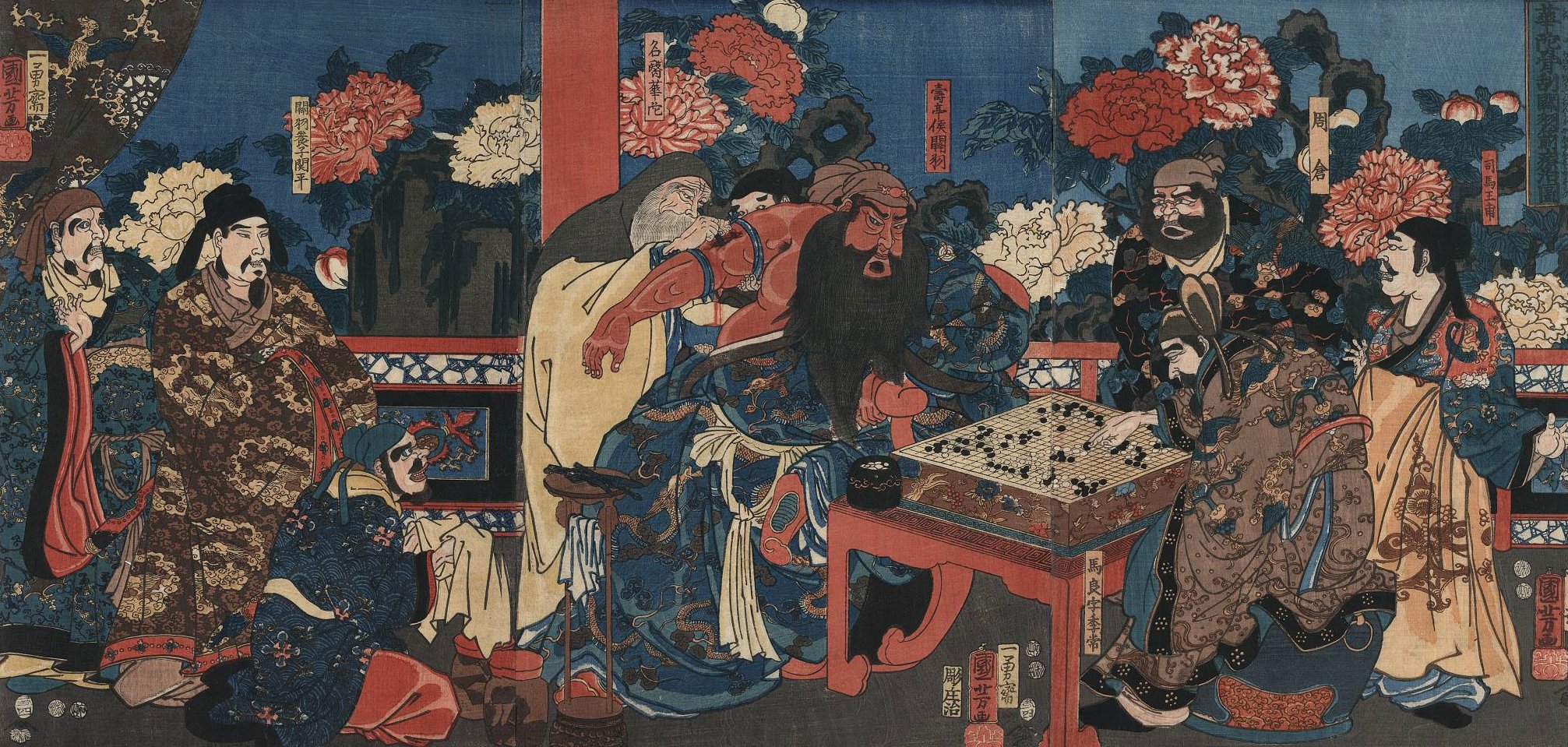
I grew up on the Three Kingdoms. Before I knew any theory, I knew the stories. Zhuge Liang opens the gates of an empty city and plays the zither on the wall, and Sima Yi, sure it is a trap, turns his army around. Liu Bei and Sun Quan join forces at Red Cliffs, then spend years fighting over who gets Jing Province. As a kid I read these as stories about clever people.
Then, in my puberty phase, I read Game of Thrones. Same lesson, more betrayal. Everyone at court is guessing what everyone else will do, and the ones who guess wrong don’t last long. I still read all of it as stories back then. Now I read them as games.
The switch happened in my International Relations class. We were studying classical realism, and that is where I first met the Stag Hunt. Two hunters can catch a stag together or each catch a hare alone. The stag is worth more, but only if the other hunter stays. I remember thinking that this one small table explained alliances better than a whole chapter of history.
After that class I started to really like game theory. Then in summer 2025 I studied Cooperative AI, which asks how AI agents can learn to work together instead of against each other. Underneath it was game theory again, the same dilemmas with learning agents as the players. Somewhere in that summer I fell in love with it.
I am really, really into game theory now. So I did what I always do.
My college journey is a little strange because I make too many independent study courses. I sit with an idea until I find a topic I think is worth understanding. Then I collect the readings, write the whole syllabus myself, grab a random professor, and persuade them to be my supervisor. lol. Game Theory for Political Science was a course I designed myself, just for me :) I wrote the proposal at the end of that summer and took the course in fall 2025.
The syllabus I wrote
By the end, I wanted to be able to do four things.
- Explain the core ideas of game theory and why they matter for political behavior.
- Model political situations like alliances, deterrence, and voting as strategic games.
- Use the Prisoner’s Dilemma, Chicken, and coordination games to make sense of outcomes at home and between states.
- Look at real political events and ask what the strategic logic was.
Here is how the weeks went.
| Week | Topic |
|---|---|
| 1-2 | Rational choice and strategic interaction |
| 3-4 | Static games: the Prisoner’s Dilemma, Chicken, and the Stag Hunt |
| 5-6 | Applications in IR, elections, and domestic bargaining |
| 7-9 | Research workshop on building a model and choosing a political case |
| 10-14 | Drafting the research paper |
| 15 | Final paper |
I’m writing these notes in the spirit of the Feynman technique. If I can explain an idea in plain language, I probably understand it. If I can’t, the gap shows up on the page.
The books
Three books shaped the study. Morrow gave me the tools. Axelrod made me care about what happens when the game repeats.
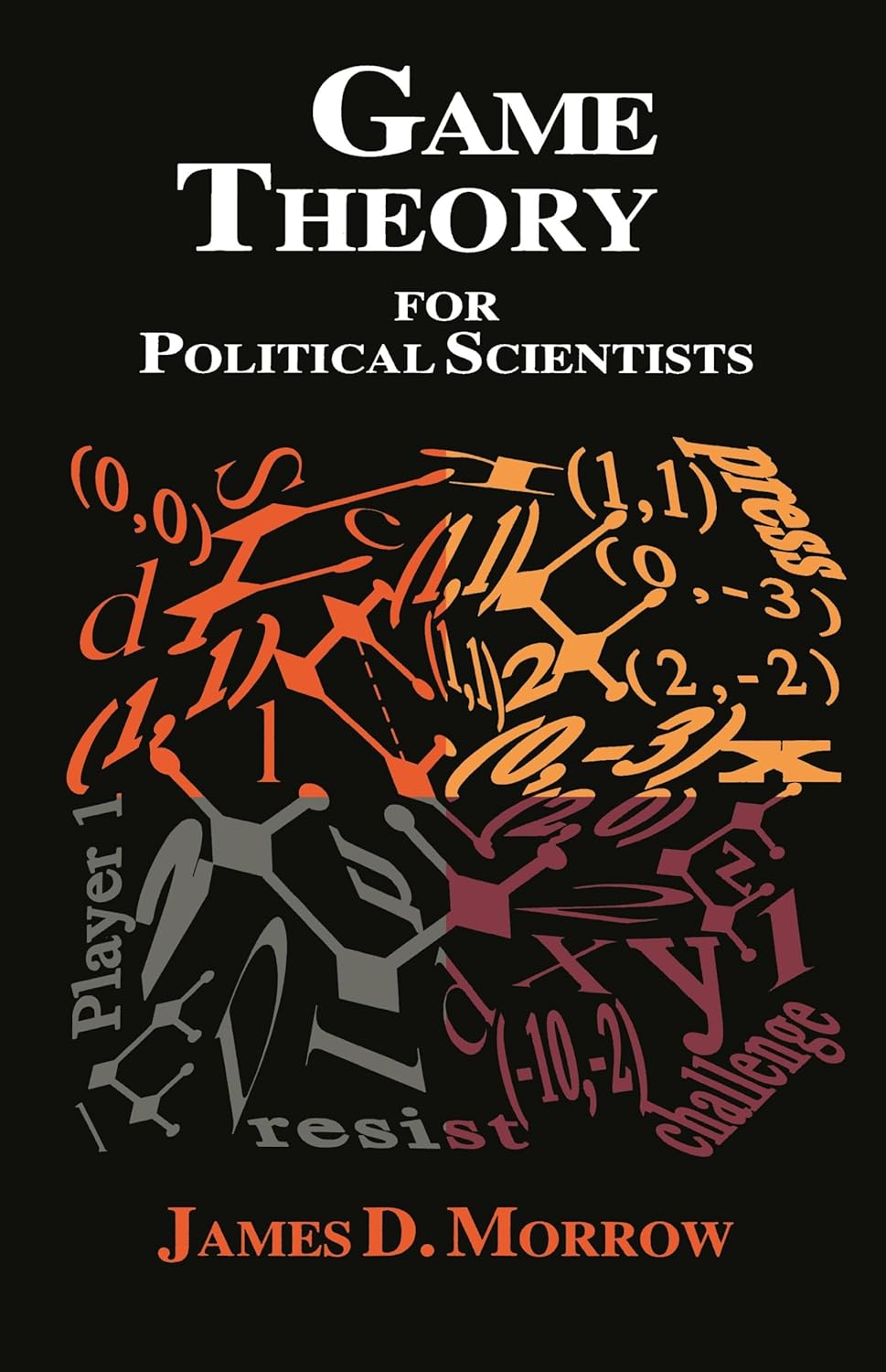
Game Theory for Political Scientists
The main textbook for the study. It taught me how to set up a game, solve it, and say what the equilibrium means for politics.
View book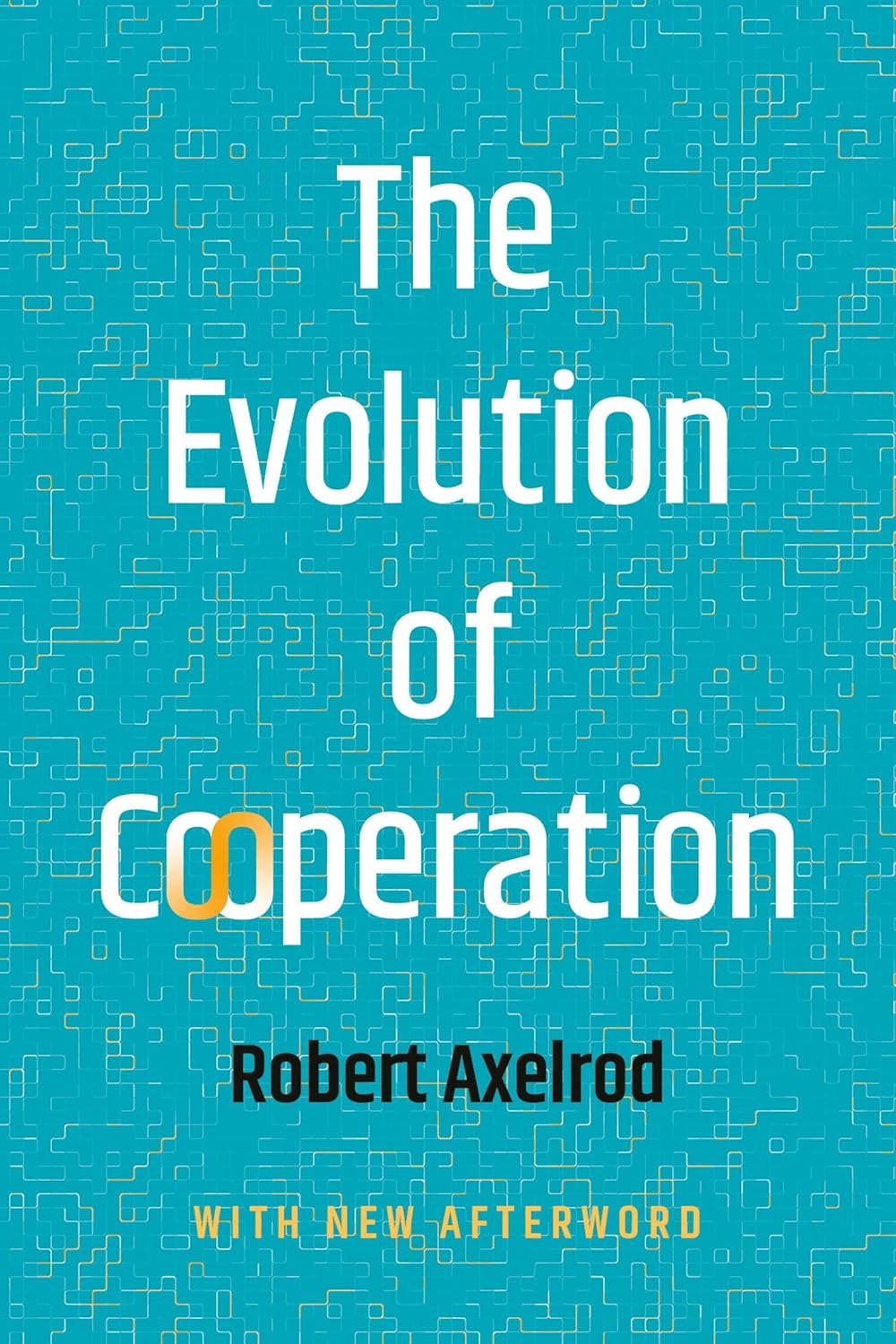
The Evolution of Cooperation
A computer tournament of repeated Prisoner's Dilemmas, won by a four-line strategy called tit-for-tat. It made cooperation feel like something you can study.
View book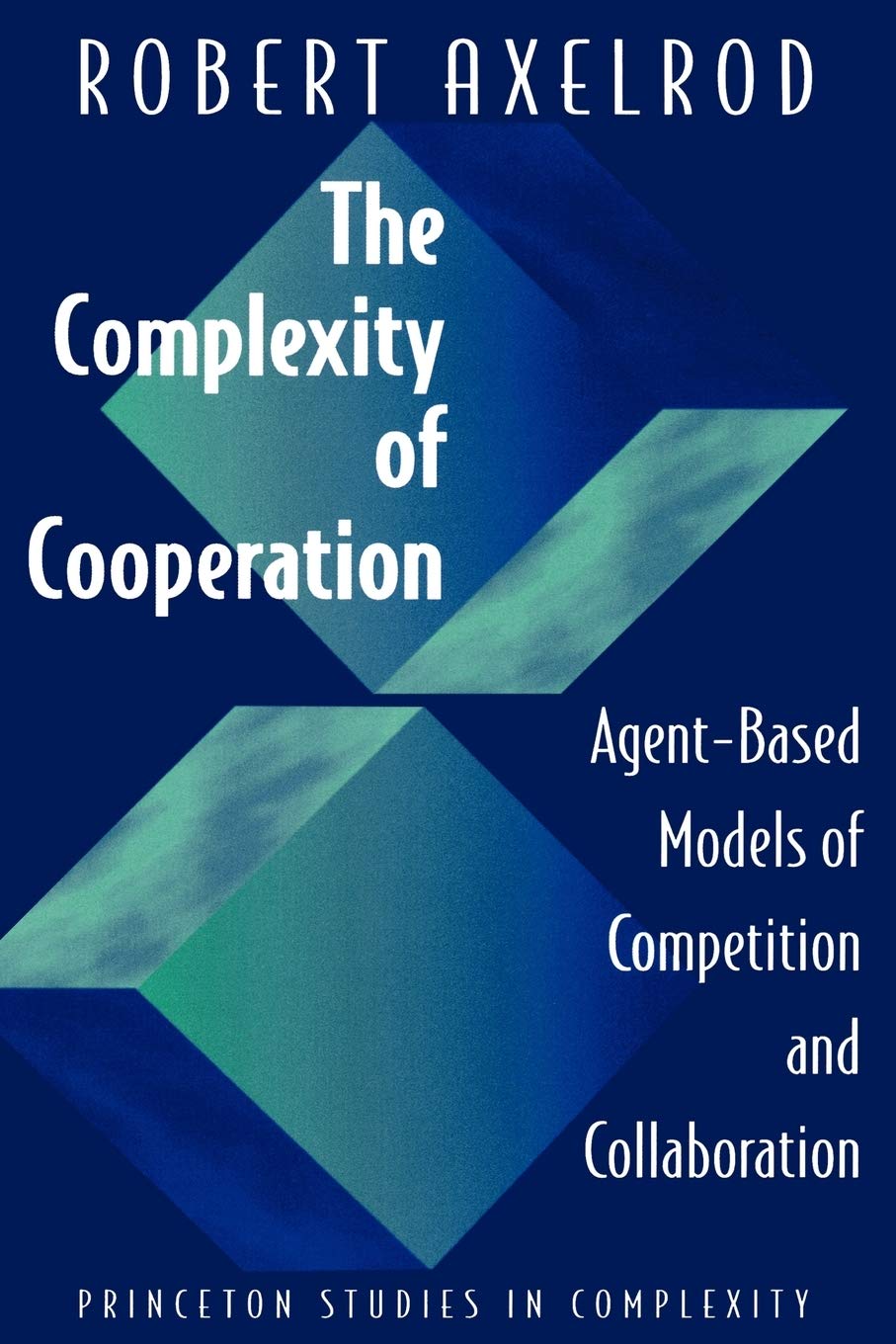
Complexity and Cooperation
The follow-up. Agents adapt, make mistakes, and form groups, so the clean models start to look like real political systems.
View bookFour major problems in political science
Bargaining
Two sides have to divide something, like territory, money, or power, and each would rather have more. The surprising result is that war should almost never happen. Fighting is costly, so both sides should prefer some deal over a war that ends in the same split. James Fearon’s answer to why wars happen anyway is that the sides have private information and cannot promise to keep a deal once the balance of power shifts. Liu Bei borrowing Jing Province and then refusing to return it is a commitment problem you could put in a textbook.
Voting
Voting games ask how individual choices add up to a group decision. The median voter theorem says that when voters line up on one dimension, two parties competing for votes both move toward the voter in the middle. Arrow’s impossibility theorem is the bad news. With three or more options, no voting rule meets every fairness condition at once. Somebody’s choice of procedure always shapes the outcome.
Deterrence
Deterrence is about stopping someone before they act. A threat works only if the other side believes you would carry it out, even when carrying it out would hurt you too. Thomas Schelling wrote about this as a contest of nerve, and the game of Chicken is the simplest version. The empty city is deterrence in reverse. Zhuge Liang had no army, so he made his weakness look like a trap.
Legislative rules
Rules for how a law gets proposed, amended, and voted on look boring, but they decide who wins. A committee that sets the agenda can offer a bill that the floor will accept only because the alternative is worse. Kenneth Shepsle called the result a structure-induced equilibrium. Preferences alone would cycle forever, and the rules make the outcome stable.
What I’m taking from this
All four problems have the same core. Players don’t know everything, they care about what the others will do, and the rules of the game change the result. The Three Kingdoms stories stuck with me because they’re full of bluffs, broken promises, and alliances that only last while both sides need them. Game theory gives me a way to say why.
If I’m honest, one idea ended up taking all my attention, and it was signaling. The empty city is a signal. So is a threat, a broken promise, or a choice to stay quiet.
I’ll be back with more game theory soon.